
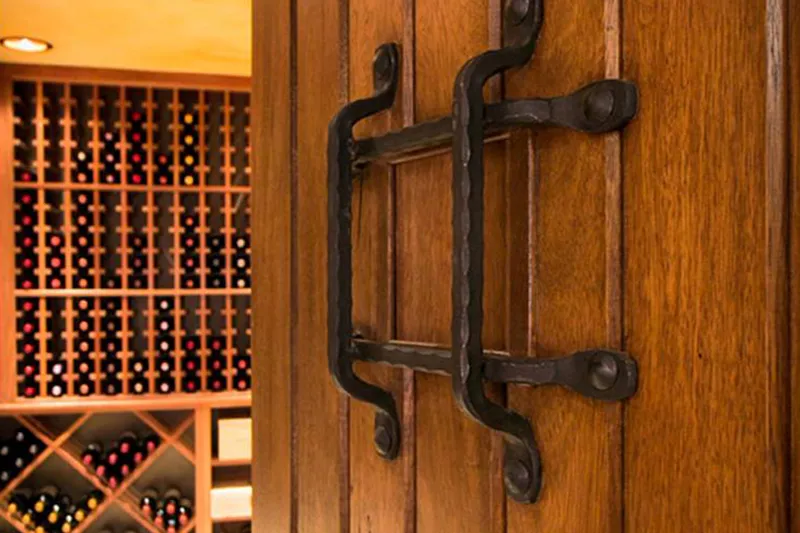
While you may gravitate toward an interior door for your wine cellar, the space demands a more robust custom door. You could buy an off-the-shelf door, but your wine cellar deserves an entry as unique as the wines you collect. And just as your front door makes a powerful first impression for your home, the wine cellar door makes a statement about the experience visitors can expect.
Essential Characteristics of a Wine Cellar Door
The door to your wine cellar needs many of the same features as an exterior door. It must be:
- Insulated to prevent air from entering or exiting the wine cellar.
- Solid wood wine cellar doors have inherent insulating properties. Hardwoods such as mahogany, walnut, or oak resist humidity that can cause decay.
- Other materials, such as glass or galvanized metal, are also available to insulate your wine cellar door.
- Energy-efficient, to help you maintain the ideal temperature for preserving the wine quality and taste.
- Wine cellar doors have an R-value that measures thermal resistance, and higher R-values provide more climate control. Thermal glass with a vacuum or filled with argon-gas offers more energy efficiency than standard glass. A solid wood wine cellar door with a thickness of 2 ¼-inch can also provide a high R-value.
- Secure from the elements and unwanted visitors. Installation of custom doors, including wine cellar doors, is essential to maximizing the insulating properties and security of the entryway.
- The door to your wine cellar must sit snugly into a solid frame that can support the heavier weight of the material. A custom door manufacturer will craft a door and frame measured precisely to fit your wine cellar and provide the most insulating, secure installation.
- Stylish to reflect the architectural design of the wine cellar and your preferences. Can you install a highly functional wine cellar door without a specific style? Absolutely, but you’ve likely invested substantial resources into your collection and creating the wine cellar. A door that looks like a restaurant refrigerator falls short of conveying the delicious flavours and warm memories to share with your wine tastings.
- Partnering with a custom door manufacturer gives you access to beautiful wood wine cellar doors, etched glass, or iron embellishments.
- An expert in wine cellar door installation ensures the door framing, hardware, and lock complement the door’s style and deliver the functionality you need to maintain the integrity of your wines.
Popular Wine Cellar Door Materials and Their Benefits
Choosing the right material is critical when designing wine cellar doors. Different materials offer varying levels of insulation, aesthetics, and protection. Here’s a quick comparison of the most popular options:
| Material | Benefits | Considerations |
| Solid Wood | Excellent insulation, timeless look, customizable with stains/finishes | Requires maintenance, may expand/contract |
| Glass (Insulated) | Showcases your collection, available in double or triple-pane for insulation | Must use Low-E glass to block UV light |
| Wood & Glass Combo | Blends the warmth of wood with the visibility of glass; highly customizable | Balance between aesthetics and insulation |
| Iron Accents | Adds elegance and security; pairs well with wood for traditional designs | Typically decorative, requires upkeep |
According to Wine Racks America, insulated glass and hardwood frames are most effective at maintaining temperature stability while allowing design flexibility.
Traditional Wine Cellar Door Designs for Classic Homes
For those who appreciate timelessness, traditional wine cellar doors are an excellent choice. They are typically made from rich hardwoods such as mahogany, oak, or walnut and feature detailed craftsmanship with raised panels, arched tops, and hand-carved accents. Wrought iron grilles or decorative inlays often complete the classic look, which makes the door itself a statement piece.
Traditional designs are not just about appearance; they also ensure durability and insulation. Many homeowners choose this style to reflect the heritage and luxury associated with fine wine collections. As Architectural Digest points out, wood and iron combinations remain a staple in luxury interior design.
Custom Wine Cellar Doors: Balancing Style and Function
A custom-built wine cellar door allows you to combine aesthetics with functional requirements. Whether you envision a glass-fronted entry or a wood-and-iron piece, customization ensures the door complements your home’s architecture while meeting technical needs like airtight sealing and insulation.
Custom designs also let you choose finishes that match your existing interior, whether that’s a matte stain for a contemporary look or a polished mahogany finish for traditional elegance. This balance of style and practicality makes custom doors one of the most popular options among luxury homeowners who see their wine cellar as both a storage space and a showpiece.
Are you building a space for your wine collection and need a new solid wood wine cellar door? Ready to upgrade your current wine cellar door? Contact the Master Doors Canada team today at (647) 699-4657.
FAQ's
What materials are best for wine cellar doors to maintain temperature and humidity?
The best materials are solid wood and insulated glass. Solid wood offers natural insulation, while insulated Low-E glass panels protect against UV damage and help regulate temperature and humidity. A combination of the two is ideal for performance and design.
Are wood or glass doors better for wine cellars?
It depends on your goals. Wood doors provide excellent insulation and a traditional look, while glass doors showcase your collection. Insulated wood-and-glass doors combine both benefits, which makes them a popular choice for modern wine cellars.
Do insulated wine cellar doors improve energy efficiency?
Yes. Insulated wine cellar doors reduce the workload on your cooling system by minimizing temperature fluctuations and preventing humidity loss. This protects your wine and lowers long-term energy costs.
Are reinforced frames needed for wine cellar doors?
Reinforced frames are strongly recommended. They help the door form a tighter seal, support the weight of solid wood or glass, and increase security. Without reinforcement, the insulation and stability of the cellar could be compromised.
How should I maintain a wood wine cellar door over time?
Regularly check the finish and seals. Clean the surface with a soft cloth and mild cleaner, reapply protective finishes every few years, and inspect the weatherstripping for wear. Proper maintenance ensures the door remains attractive and functional.